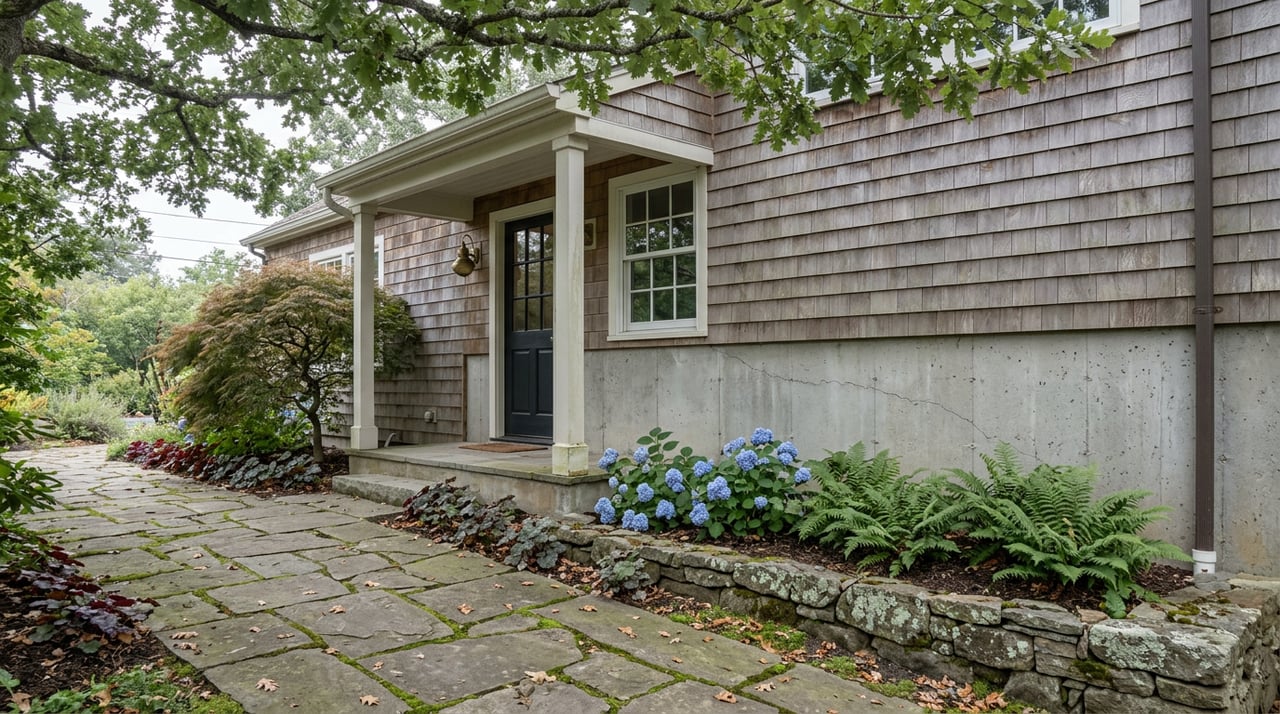
San Anselmo Sewer Compliance for Home Sales Explained
September 17, 2026
September 17, 2026
"Property owners must obtain a Certificate of Compliance from RVSD for any of the following conditions: buying or selling a property, remodeling in excess of $75,000, or adding a bathroom." That single sentence, printed almost verbatim on the Ross Valley Sanitary District's own website, is the entire rule most San Anselmo sellers ever hear about before it shows up in their transaction.
What that sentence doesn't tell you is when the clock actually starts, and that's where sellers get tripped up, not by the rule itself but by assuming it works like every other point-of-sale inspection in Marin.
Here's the part that surprises people: Ross Valley Sanitary District, which covers San Anselmo along with Fairfax, Ross, Larkspur, Kentfield, Greenbrae, and Sleepy Hollow, does not require you to pass a sewer lateral inspection before you close escrow. The responsible party gets 90 days after close to reach compliance, and the purchase contract decides whether that responsible party is the buyer or the seller. That's a real difference from Las Gallinas Valley Sanitary District, just a few miles north in San Rafael and Terra Linda, where inspections of all lateral and mainline work are required before close of escrow, with a standard ten-business-day review. An agent or a friend who sold a home in Terra Linda last year and tells you how the sewer inspection works is describing a different district with a different clock, and applying that timeline to a San Anselmo sale gets the sequence exactly backwards.
For most sellers, the 90-day post-close window is genuinely good news. It means the certificate rarely holds up your closing date, and it gives you room to negotiate who handles the repair rather than scrambling to finish work before a buyer's loan funds. The ordinance itself has been in place since 2014, with the property-sale requirement taking effect January 1, 2015, so this isn't new territory. The complication shows up somewhere else entirely.
San Anselmo's downtown core and several of its older residential pockets date back to the town's founding in the late 1800s, and a meaningful number of homes in those areas were built before anyone thought to give each house its own dedicated sewer connection. What they got instead, in some cases, was a common lateral: one pipe serving two or more properties on its way to the public main.
Ross Valley Sanitary District treats these legacy shared lines as a private matter between the property owners, not something the district manages or funds. Common laterals don't qualify for the district's grant or loan assistance at all. If you're the homeowner with the furthest downstream connection, you're responsible for the remaining shared portion of the line, including where it ties into the public main, regardless of whether a recorded easement exists. The only path to district assistance is disconnecting entirely and building your own separate, compliant connection, which is a bigger and more expensive project than a routine repair.
That changes the actual negotiation. It's not the district holding up your sale. It's a neighbor who isn't selling, has no certificate deadline of their own, and no particular reason to move quickly on a shared repair that benefits your escrow more than theirs.
Condos and townhome complexes carry a version of this same issue, just routed through the homeowners association instead of an individual neighbor. Common Interest Developments in the district were required to bring all parcels into compliance under a schedule that closed out by January 30, 2024, with responsibility typically spelled out in the CC&Rs. If a unit's CC&Rs don't specify who maintains which portion of a shared lateral, that's a question for the association's records, not something a 90-day escrow clock resolves on its own.
The financial picture has moved recently, so figures that were accurate a year ago aren't the ones in effect now. Effective May 1, 2026, Ross Valley Sanitary District increased its grant for lateral replacement to as much as $3,000, and the district's loan program can extend up to $60,000 for qualifying complex projects. That loan is attached to the property rather than the person, which matters for anyone selling with an outstanding balance: it doesn't transfer, and it has to be resolved at the time of sale.
Permit fees themselves adjust every July 1, so a number you looked up in the spring may already be out of date by the time you're actually opening escrow. None of this assistance applies to common laterals unless the fix is a full disconnection into a new, separate line.
San Anselmo sits inside Ross Valley Sanitary District, but Marin's sewer rules genuinely change at district lines, sometimes street by street. Here's how the three most relevant Marin agencies compare:
| District | Compliance trigger | Timing relative to close | Notable exemption |
|---|---|---|---|
| Ross Valley Sanitary District (San Anselmo, Fairfax, Ross, Larkspur, Kentfield, Greenbrae, Sleepy Hollow) | Sale, remodel over $75,000, or added bathroom | 90 days after close of escrow | Certificate valid 20 years once issued |
| Las Gallinas Valley Sanitary District (San Rafael, Terra Linda) | Any lateral or mainline-related work | Before close of escrow | Standard review runs about 10 business days |
| Sanitary District No. 5 (Tiburon, Belvedere) | Sale | Handled under district-specific ordinance | Laterals installed or replaced in the past 20 years, or inspected in the past 3 years with repairs completed, are exempt |
The point isn't to memorize three sets of rules. It's to confirm which district actually serves your parcel before you build your listing timeline around an assumption borrowed from a different one.
Treating the 90-day window as a plan, rather than a starting point, is where sellers lose time they didn't need to lose. A more workable sequence looks like this:
That sequence matters more in a market moving as quickly as San Anselmo's has been. Homes here sold in a median of about 15 days over the three months ending in June 2026, with a median sale price near $1.57 million over that same window. A market that fast doesn't leave much room to discover a shared sewer line for the first time after an offer is already accepted.
Does every home in San Anselmo need a new sewer lateral inspection to sell? No. If a valid certificate is already on file, typically one issued within the past 20 years, you may not need a new inspection at all. The first step is checking district records rather than assuming you're starting from zero.
Can a seller just leave the repair for the buyer to handle after closing? Yes, within the ordinance's structure. The purchase contract determines who becomes responsible, and the 90-day clock runs from close of escrow regardless of which party ends up doing the work. What matters is that the agreement spells this out clearly rather than leaving it to assumption.
What happens if my line is shared with a neighbor who isn't selling? The district considers common laterals a private matter between the owners involved, so resolving compliance usually means coordinating repair timing and cost directly with your neighbor, since district grant and loan funding doesn't apply to shared lines unless the fix involves a full, separate reconnection.
This is the kind of detail that rarely shows up until you're already in escrow, which is exactly why it's worth sorting out before you list. If you're weighing a sale in San Anselmo, or trying to understand what a specific property's sewer history actually means for your timeline, Janey Kaplan can help you get the right questions answered early, while there's still time to act on the answers. Let's Connect.
Stay up to date on the latest real estate trends.


Get assistance in determining current property value, crafting a competitive offer, writing and negotiating a contract, and much more. Contact me today.