What The View Doesn't Show: Due Diligence For A Sausalito Hillside Home
August 6, 2026
August 6, 2026
The panorama is the easy part. Stand on almost any deck above Bridgeway and the pitch writes itself: Richardson Bay in the foreground, Angel Island holding the middle distance, the city skyline closing the frame. Buyers who tour three Sausalito homes in an afternoon tend to remember the views and forget the stairs.
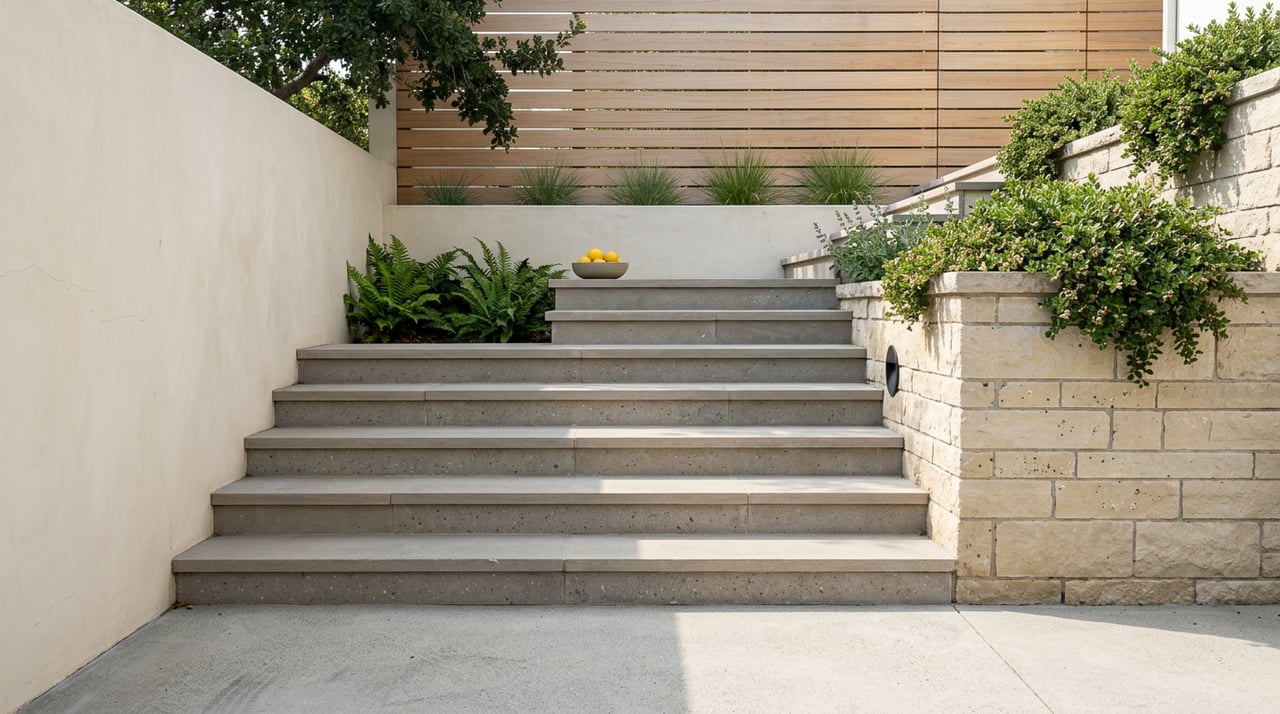
The stairs, and the retaining walls under them, and the drainage tucked behind them, are where a Sausalito purchase becomes a different transaction from anything else in Marin. The view is already priced into the list. What isn't priced in is the private infrastructure a hillside parcel quietly obligates its owner to maintain, and the pre-sale paperwork the city hands you won't flag it.
Sausalito is one of the few Marin cities that requires a Residential Building Record Report before any residential sale or exchange. The city requires a Residential Building Record Report before the sale or exchange of any residential building, and that report states the regularly authorized use, occupancy, and zoning classification. The city also says it does not perform a physical building inspection for that report, so it is useful, but not a substitute for inspections.
Read that twice. The document tells you what the city has on file about what the home is legally allowed to be. It does not tell you whether the deck cantilevered off the master bedroom was permitted, whether the lower guest suite was ever legalized, or whether the retaining wall at the top of the driveway has a stamp behind it. That research lives in the city's eTRAKiT permit portal, which is where the actual due diligence happens. On a hillside lot with a history of decks, stair systems, exterior additions, and remodels, that permit trail is often the difference between a clean close and a post-inspection renegotiation.
The second surprise sits at the property line, and it is not where most buyers assume it is. Marin County notes that private drainage systems and driveway culverts are generally the property owner's responsibility, while Sausalito says public works maintains infrastructure in public easements and rights-of-way such as certain stairs, pathways, sewers, storm drains, and shorelines.
That split matters on a slope. A public stairway two doors down may be maintained by the city. The stairway that climbs from your street to your own front door almost certainly is not. On shared-access parcels the question gets sharper still. Ask, in writing, who pays for upkeep on the following:
If access is shared, ask who pays for upkeep on stairs, retaining walls, drainage, lighting, or paving. Shared use without a clear maintenance framework can create future disputes and surprise costs. A verbal agreement between two prior owners is not a maintenance framework. It is a rumor.
Sausalito is small enough that buyers treat it as one market. It behaves as three. The hillside above town, the flats near Bridgeway and the Ferry Landing, and the floating-home community anchored at Waldo Point Harbor each carry a different due diligence load, a different lender conversation, and a different resale story.
| Submarket | What you're buying | Where the friction lives |
|---|---|---|
| Hillside view homes | Privacy, sun pockets, panoramas | Permit history, retaining walls, drainage, stair systems, area parking permits |
| Downtown flats near Bridgeway | Walkability, ferry access, gentler grades | Parking assignments, HOA rules on flats and condos, guest-parking limits |
| Floating homes at Waldo Point Harbor | Waterfront living, deep-water berths | Berth lease terms, hull surveys, specialty lenders, insurance classification |
Pricing follows the same split. Downtown flats and many condos are often the more affordable entry points in Sausalito, with prices in the lower to mid seven figures depending on size and proximity to the water. Hillside view homes span a wide range, often in the mid seven figures, with premium, remodeled properties in top view corridors reaching higher price bands. Waterfront and floating homes vary widely, from smaller or older floats that can trade in the lower seven figures to rare waterfront estates that reach the upper ranges.
Floating homes deserve their own paragraph because buyers routinely underestimate the lender problem. There are roughly 480 floating homes across ten docks in Sausalito, and the financing pool for them is not the pool a conventional buyer is used to. Most floats are classified as personal property rather than real estate, which limits the number of lenders willing to write a loan and typically pushes down payments to 20 to 25 percent. Insurance combines homeowner and marine coverage and is written by a narrow set of carriers. If a buyer is comparing a hillside cottage at $1.6M against a floating home at $1.6M, those two offers are running on different rails.
As of June 2026 the median home price in Sausalito is $1,399,000, while the average sale price is $1,925,108. On average, houses spend 53 days listed before being sold.
The gap between median and average is the story. A median around $1.4M and an average above $1.9M in the same month tells you the top of the market is doing the heavy lifting on total dollar volume, while a wide band of smaller units, downtown flats, and floating homes is filling in the middle. The 53-day marketing time reads slow next to inland Marin, but it is the expected pace for a built-out coastal town where the housing market is defined by scarcity rather than volume, the town is largely built out, zoning limits expansion, and many owners hold properties for decades, which keeps inventory low and turnover slow.
The Sausalito view is the reason people write the offer. The private infrastructure under the view is the reason some of those offers renegotiate at day 20.
For a buyer, that means the market rewards patience on the front end and speed on due diligence once a property is identified. Homes that check out cleanly on permit history, drainage, and access tend to price above the median for their size. Homes that don't sit on the market until a buyer accepts the friction.
Working through a hillside contract in order matters more here than in a flat market. A recommended sequence:
None of these steps is exotic. Each one, skipped, is a common source of post-close regret.
Does the Residential Building Record Report replace a home inspection? No. The report captures authorized use, occupancy, and zoning classification as the city has them on file. It is not a substitute for a licensed inspector walking the property.
Is a floating home a real estate transaction or something else? It can be either. Classification depends on how the specific home is affixed and titled. Some floating homes are treated as real property and can access conventional financing. Others are treated as personal property or vessels and require specialty lenders, larger down payments, and marine-inflected insurance.
How much does parking really matter on the hill? More than most out-of-town buyers expect. The city notes that parking can be difficult in many residential areas, and some neighborhoods require area parking permits. Ask what the property's assigned spaces are, whether the block requires a permit, and what happens when a contractor needs to stage a job.
What is the single most useful pre-offer document to request? The permit history for any exterior work in the last twenty years. It surfaces almost every issue that ends up on an inspection punch list, and it is often the fastest way to distinguish a well-loved home from one that has been improved on the honor system.
Sausalito is a rewarding place to own a home if the paperwork behind the view holds up. Working with a local advisor who reads permit histories the way most buyers read floor plans is the difference between a purchase that ages well and one that keeps sending you invoices. If you're weighing a hillside offer, a downtown flat, or a berth on Richardson Bay and want to work through the specifics before you write, Janey Kaplan is available to talk it through. Let's connect.
Stay up to date on the latest real estate trends.

Get assistance in determining current property value, crafting a competitive offer, writing and negotiating a contract, and much more. Contact me today.